
Coffee Cart Health Department Requirements: How to Pass Your Inspection
I FAILED my first coffee cart health department inspection, and if you’re starting a mobile coffee cart business, this is exactly what you need to know to pass yours. Every state has different coffee cart health department requirements, so don’t panic, not everything I list will apply to you. But this guide will help you understand how to find your local mobile food vendor requirements and avoid the mistakes I made.
First things first, each state has VERY different requirements for a coffee cart. I originally started my coffee cart in NC where they didn’t regulate coffee carts, but when I moved to Austin, I had to meet strict mobile food vendor permit requirements to legally operate. To find out what your state requires, I would honestly start with Chat GPT (sorry ik it sucks to say, but it did make the process a lot easier). If you explain your coffee cart setup, what coffee drinks you are serving, and what state you live in, it should give you a nice list of what is needed to get your mobile food vendor permit. I used that as a jumping point for what websites I needed to go to, what courses I needed to take, etc.
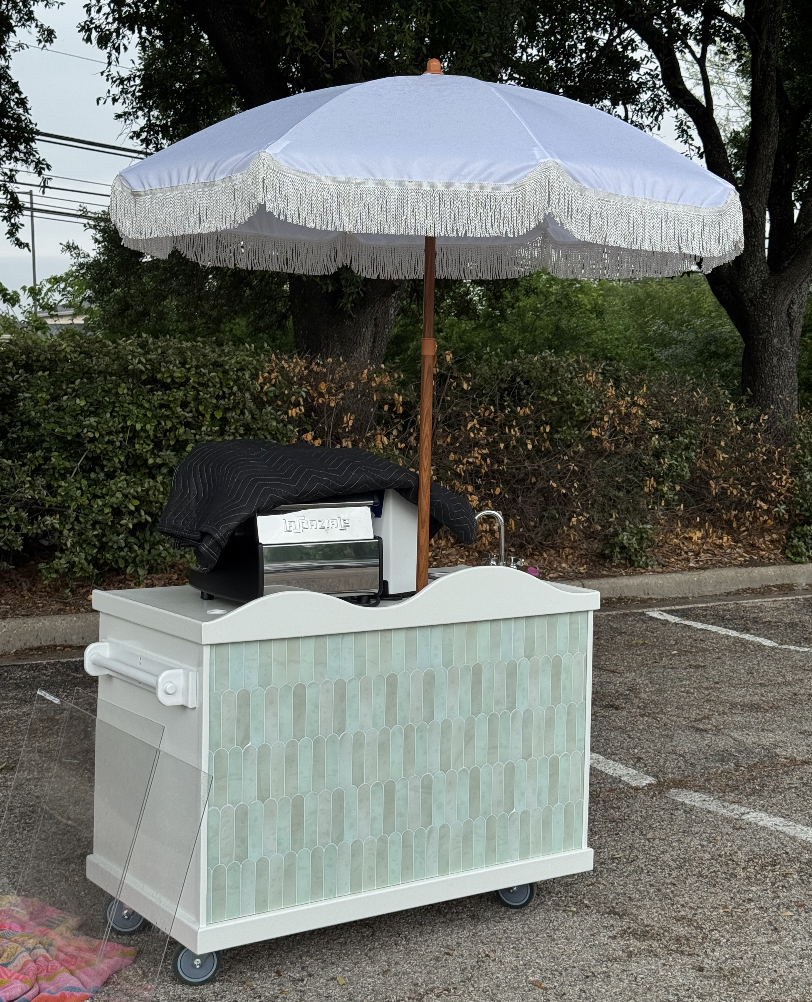
Coffee Cart Health Department Requirements (What I Needed to Apply):
Be sure to look up your requirements EARLY. Even if you are just thinking about starting a coffee cart, look it up first. Especially if you have already started the build, then you reallyyy need to be looking it up. I found out I was moving to Austin about halfway through my build, and due to their strict mobile food vendor requirements I almost had to restart the whole thing. It also took a few weeks for my application to be processed, and then they won’t even schedule you for a health inspection for about a month. If they schedule you for an inspection before you are ready, you can always push it back - no big deal.
First, I had to complete a Food Managers Certification from statefoodsafety.com. This was $65 and was an 8 hour course that I completed online. Again, you may not need this, so just double check first.
Next, I needed to find a Central Preparation Facility (CPF). This is a fixed commercial kitchen where mobile food vendors (food trucks, trailers, carts) prepare food, store supplies, clean equipment, dump wastewater, and refill fresh water. To find one I simply looked up “Central Preparation Facility in ____” and then I compared prices, made inquiries, and found one I liked. For these central preparation facilities you pay a monthly fee of about $40-$100 in order to be able to use their facility and maintain a contract. I applied fully online in a super simple process, and then I picked up the contract needed for the application from the CPF. When I go there to dump my waste water, I also need to keep a log of every time I visit the facility. Again, you may not need one of these, so just double check first.
I also was required to submit an itinerary of what coffee cart events I will be attending, as well as Restroom Agreement showing there will be public restrooms nearby. Since I didn’t know where I would be serving coffee, I was able to let them know, and they made me sign documents saying that once I know where I will be serving I will inform them.
The rest of the mobile food vendor application was basic info about my coffee cart, such as my LLC info, tax numbers, location, etc! Once the health department reviewed and approved my application, they sent me a date for my coffee cart inspection. The cost to apply was around $300 and they only charged me once I was approved.
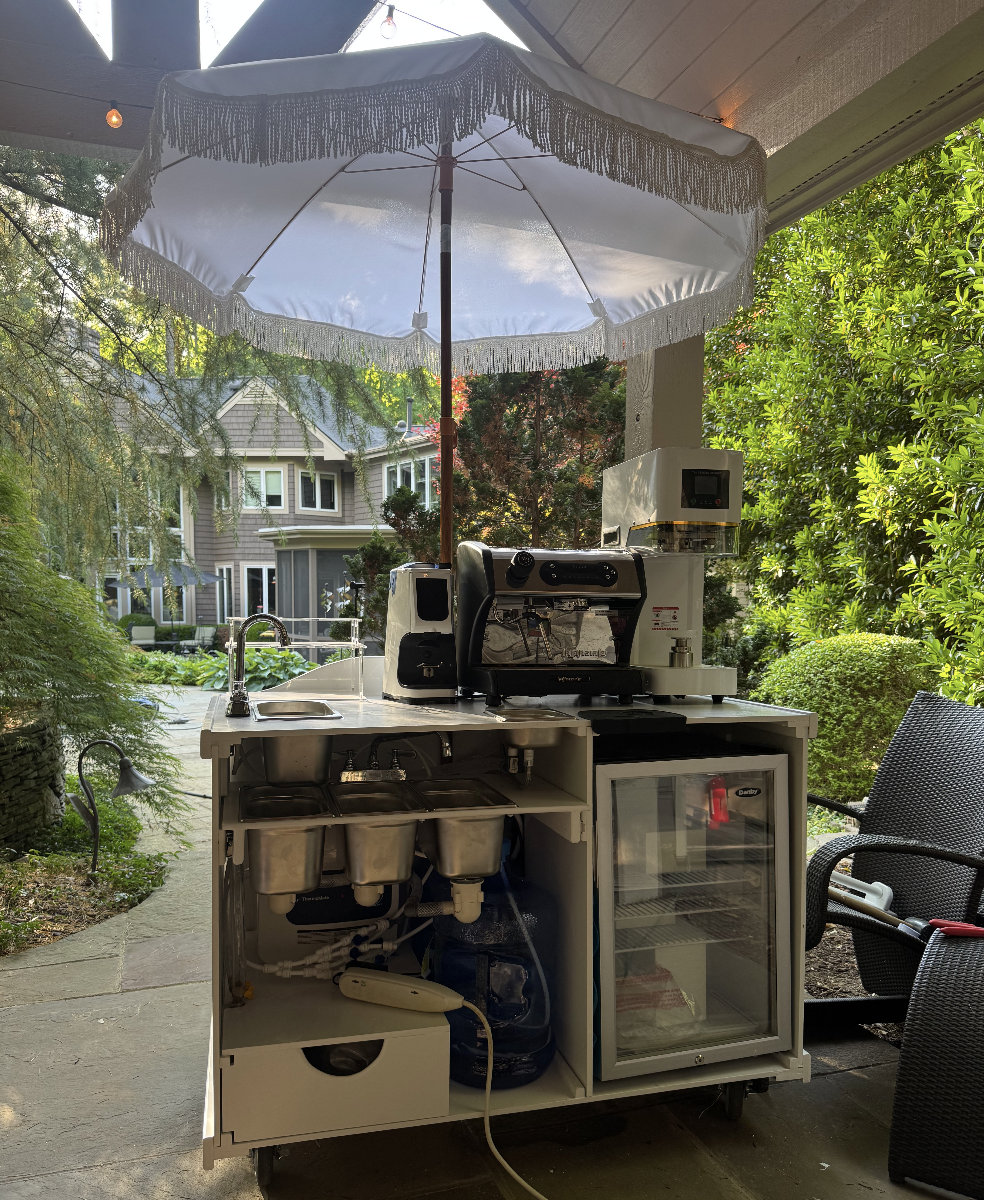
How to Pass Your Coffee Cart Inspection:
My city had a document with a list of requirements I needed to follow. In addition to a CPF I also needed a 3-bin sink for washing items as well as a separate hand-washing sink. While I had originally planned to build a separate cart for the sinks, they required the sinks to be on my coffee cart directly, so I had to build them into my cart. Other key requirements were hot water, 10 gallons of freshwater, and a covering such as an umbrella. Again, you may not need any of these items, so check with your health department about your mobile coffee cart setup first.
Some requirements weren’t very specific, and I ended up playing phone tag with their health department for hours on end. I recommend getting in contact with a health inspector directly if you have questions about your coffee cart setup or mobile food vendor permit requirements. This way you can ask them direct questions or send them photos. This was the most helpful and efficient way I got some of my questions answered.
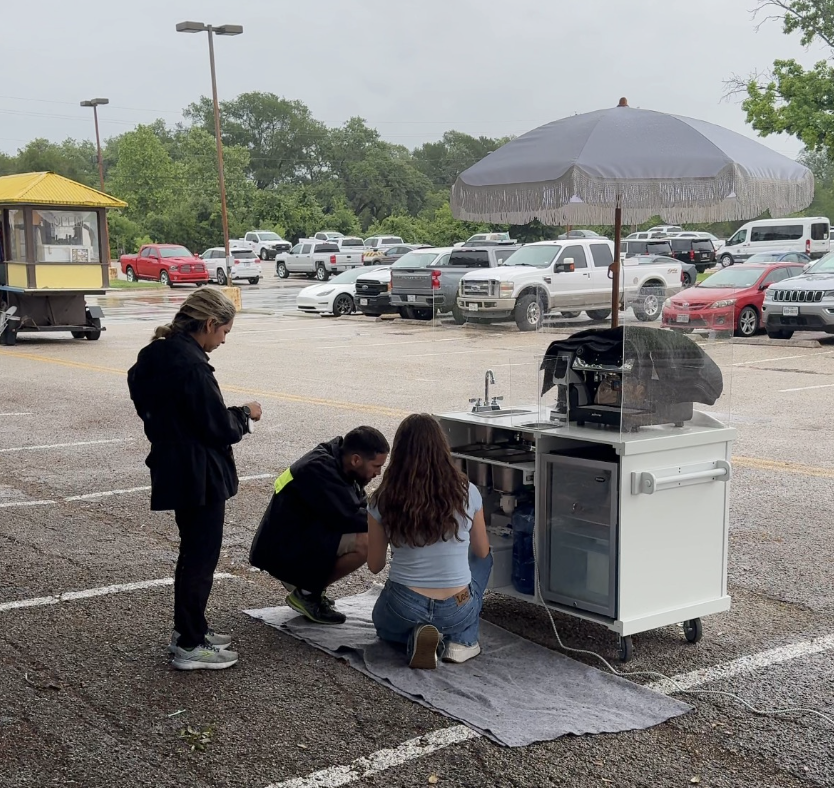
What a Coffee Cart Health Inspection Is Like:
I’m sure many of you are wondering what a coffee cart health inspection may be like, and this was my experience:
We showed up to the address they sent, and there was a short line of a few food trucks and an area in the parking lot sectioned off with cones. I got out and talked to a health inspector, and they said to just roll the coffee cart into the designated area at my appointment time.
I then got the coffee cart prepped and did just that. The health inspectors were super nice, they simply check the temperature of the water, the fridge, and made sure I had other requirements like an umbrella. Checking for all of that took about 2 minutes and they were super fast and efficient and didn’t nit-pick over details like I was worried they might.
It would have been a super easy health inspection, except the health inspectors got held up when they saw my grey-water tank. For the tank, I used a 20-gallon water bladder that would expand as it filled, and I had created a box for it to sit in. This allowed me to maximize space on my coffee cart while fulfilling the size requirements. They had never seen a water bladder before, and after about 45 minutes of deliberation they decided I couldn’t use it because they were worried it wouldn’t be durable enough.
They had never said anything against bladders in their requirements, so that is why it’s super helpful to be able to ask questions beforehand. I hadn’t even thought to ask if I could use it, because I didn’t think it would be a problem. So if you are ever doubting, just ask them ahead of time!
Now that I failed my coffee cart health inspection, I simply had to call the health department again and ask to get re-inspected. They then put me back in their queue and scheduled me for another inspection in a few weeks.
Final Tip: Don’t Skip This Step:
If you’re starting a coffee cart business, your health department inspection is one of the most important steps. Take the time to understand your local coffee cart permit requirements, ask questions early, and double-check your setup before your inspection.
If you want a full step-by-step breakdown (equipment, costs, build, etc.), check out my other blogs on starting a coffee cart.